When to use this letter
Use this letter when a real estate purchase has ended and the parties disagree about who gets the deposit. Typical cases:
- The buyer ended the deal after an inspection and the seller refuses to sign a release.
- The buyer's loan was denied and the seller claims the financing contingency was waived or missed.
- The property appraised below the price and the contract allowed the buyer to walk away.
- A title defect or seller default ended the deal.
- The firm represents a seller claiming the deposit after the buyer defaulted.
The escrow holder usually needs written instructions from both parties or a court order before releasing a disputed deposit. Rules on escrow release, interpleader and fees vary by state, and the contract may set its own procedure. Check both before sending.
What to upload
Upload up to 5 PDFs, 500 pages in total. The purchase contract and the termination notice matter most.
- The purchase contract
- The signed contract with all addenda, counteroffers and contingency deadlines.
- Proof of the deposit
- The escrow receipt or deposit confirmation showing the amount and who holds it.
- Termination notices
- The notice ending the contract and proof of when and how it was delivered.
- Contingency records
- The inspection report, loan denial letter, appraisal or title report that supports the termination.
- Correspondence
- Emails and letters saved as PDF between the parties, agents and escrow holder about the release.
What the draft includes
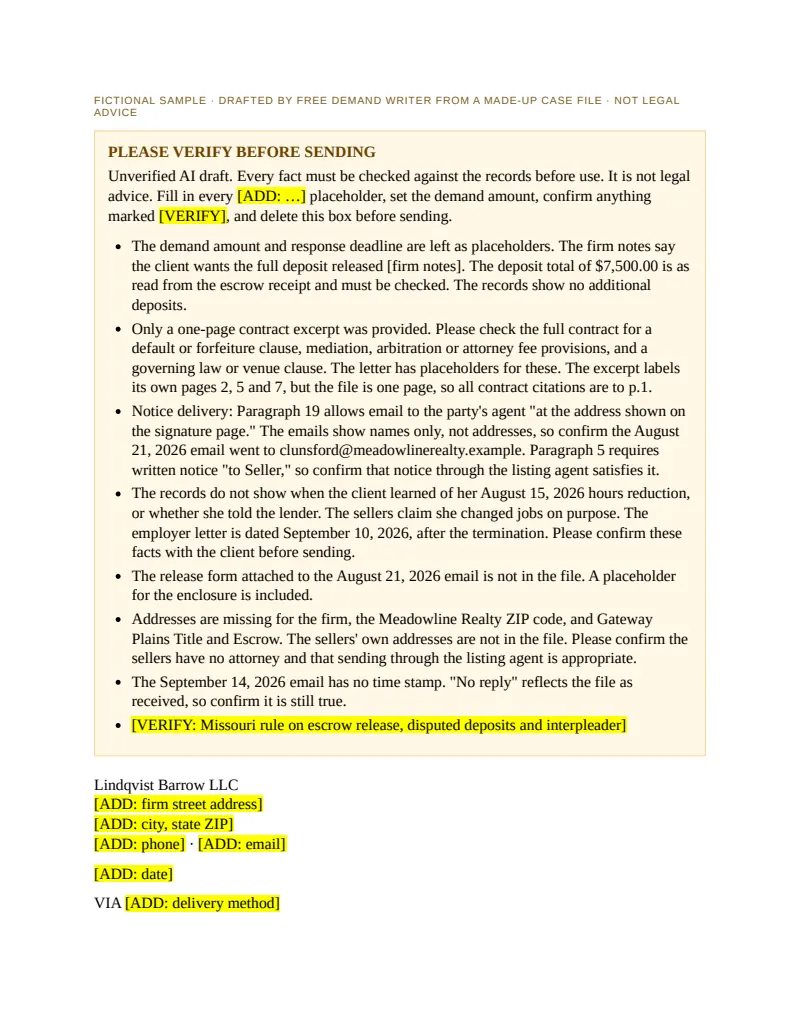
An editable Word letter built only from what your documents say. Missing facts become [ADD: …] placeholders, never guesses, and any law cited is marked [VERIFY].
- Please verify box. A short notice at the top reminding the reviewer that this is an unverified AI draft.
- The contract and the deposit. Parties, property, price, deposit amount and holder, cited to file and page.
- The governing clauses. Contingency, default, deposit and escrow release terms, quoted with section and page.
- How the deal ended. Notices, reports and deadlines in date order, drawn only from the documents. The draft never assumes a deadline was met.
- Amount at issue. A table of the deposit and any additional deposits, with the source of each.
- Escrow release. A request that the other party sign the release, with a copy to the escrow holder.
- The demand. The amount and response deadline are placeholders for you to set.
Before you send it
The result is an unverified AI draft for attorney review, not legal advice.
- Confirm each contingency deadline and the date notice was delivered.
- Check whether any contingency was waived or extended by addendum.
- Check the contract for liquidated damages, mediation, arbitration and fee clauses.
- Confirm the escrow holder's name and release requirements.
- Set the amount and deadline, and remove the Please verify box.
Common mistakes
Deposit disputes usually turn on dates. These are the errors most worth fixing before the letter goes out.
- Missing a contingency deadline If notice went out after the contingency period ended, the seller may claim the deposit. Check every date against the contract and its addenda.
- Ignoring a waiver Buyers sometimes waive contingencies in an addendum or by conduct. Find every amendment before relying on a contingency.
- Demanding the money from the wrong party The escrow holder usually cannot release the deposit on one side's demand. Ask the other party to sign the release.
- Skipping the contract's dispute process Many purchase contracts require mediation before suit and limit fees. Make sure the letter's next steps fit.
- Leaving out proof of delivery Attach the termination notice and proof of how and when it was delivered.
Free earnest money deposit return demand letter template
Prefer to write it yourself? Download a plain Word template with fields to fill in. No AI, no email needed. Sample template, not legal advice.
Questions
Is the earnest money deposit return demand letter free?
Yes. No account and no payment.
Who should receive the letter?
Usually the other party to the contract, with a copy to the escrow holder and the agents. The escrow holder typically needs both parties' instructions or a court order to release a disputed deposit.
Can a seller use it to claim the deposit?
Yes. The draft works out which side you represent from your notes and documents, and flags it in the Please verify box if that is unclear.
Will it calculate contingency deadlines?
No. It reports the dates in your documents and flags any deadline it cannot confirm. Your attorney must check them.
What happens to the documents I upload?
They are deleted as soon as the draft is generated. The Word file is deleted after 48 hours or 3 downloads.